
Charlottesville White Pages Search
The Charlottesville White Pages bring together the public record sources you need to find a person, run a court case search, or pull a property record in this small but busy city in central Virginia. Charlottesville is an independent city home to the University of Virginia. It runs its own circuit court clerk, real estate assessor, and police department. Each office holds a piece of the data you need. Most lookups are free. Use the search box below to start a White Pages search, or browse the city offices listed on this page for direct contact info, hours, and request forms.
Charlottesville White Pages Overview
Charlottesville Circuit Court White Pages
The Charlottesville Circuit Court Clerk sits at 315 High Street, Charlottesville, VA 22902. The office holds court records, land records, marriage licenses, wills, and probate records for the city. Public access terminals are open for land records and court case research. Secure remote access to land records is open by subscription for qualified professionals. Charlottesville is part of the 16th Judicial Circuit of Virginia, which it shares with Albemarle County and several rural counties to the north and east.
Charlottesville case data is also held in the statewide Virginia Courts Online Case Information portal. You pick Charlottesville Circuit Court from the dropdown and run a name or case number search. The portal is free. It shows party names, hearings, charges, and any final ruling. Court records held by clerks of courts of record in Virginia are open to the public under Virginia Code § 17.1-208. The clerk's office is the first stop for older paper case files.
The state portal lets you search by name or case number in a single page. Use the Virginia Courts Online portal to begin a Charlottesville case search. 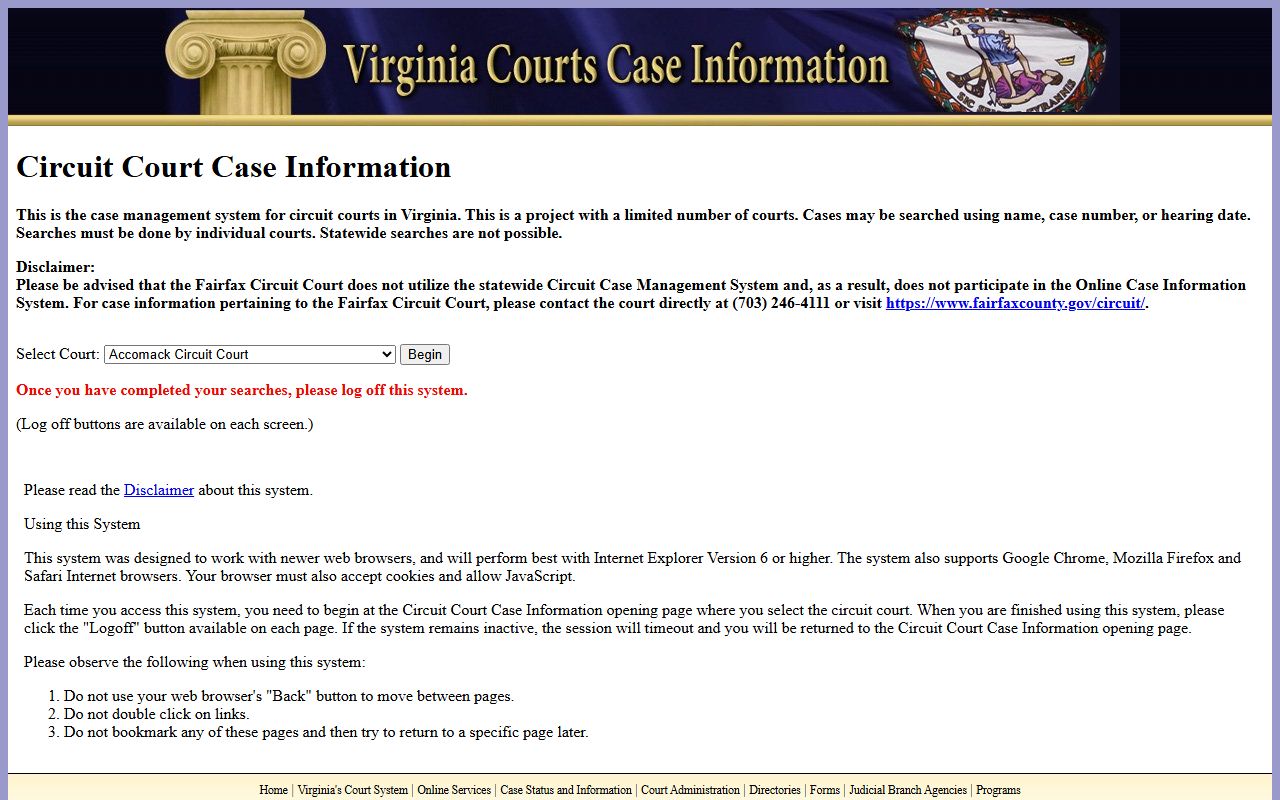 Land records can be reviewed at the public access terminals on site.
Note: Secure Remote Access to Charlottesville land records sits under Virginia Code § 17.1-279(D)(1) and is only open to qualified subscribers.
Charlottesville Real Estate White Pages
The Charlottesville City Assessor sets the value of all real property in the city for tax purposes. Real estate is assessed each year at 100% of fair market value. Property owners can search assessments online and file appeals with the Board of Equalization. The office also shares property sales data, assessment maps, and tax relief info on its public site. Virginia Code § 58.1-3201 sets the fair market value rule for all real property in Virginia.
Property data is one of the most useful White Pages tools in the city. A name on a deed gives you a current address, a sale price, and a parcel ID. From there you can pull the prior owners, the lot size, and any liens. Virginia Code § 58.1-3122.2 lets the city post those records online for free.
Use the assessor portal to look up a Charlottesville home or business. Visit the assessor page to begin a property search.  Each deed must include the parcel ID number on the first page under Virginia Code § 17.1-252.
Charlottesville Police Records Lookup
The Charlottesville Police Department handles records for incidents, accidents, and arrests. Records requests can be made in person or by mail. The department also takes part in community policing and shares crime stats on request. Active criminal investigative files may be held back under Virginia Code § 2.2-3706.
Police records tie a name to a date, an address, and an event. They are one of the main pieces of any people search in the city. Crash reports for accidents that took place in Charlottesville are also held here. Records staff can tell you what fees apply to a copy.
Vital Records and Voter Lookup
Birth and death records for Charlottesville are held at the Virginia Department of Health Office of Vital Records. A copy of any vital record costs $12. Birth records open to the public 100 years after the event. Death, marriage, and divorce records open 25 years after the event. Before that, only immediate family with valid ID can get a copy. The Charlottesville clerk holds marriage licenses for couples who applied in the city.
The Virginia Department of Elections Citizen Portal is the right tool for voter records in Charlottesville. You log in with your name, date of birth, and the last four of your social security number. The site shows registration status, polling place, and election history. Virginia Code § 24.2-428.2 sets out how voter rolls are kept and shared.
Charlottesville Business and FOIA
The Virginia State Corporation Commission keeps the public record of every business entity in the state, including those based in Charlottesville. You can run a business entity search through the SCC's CIS Online tool. Pull up the name of a company to see its registered agent, filing date, and current status. This is helpful when you are trying to find the people behind a Charlottesville business or confirm a company is in good standing.
Public records in Charlottesville are open under the Virginia Freedom of Information Act, found at Virginia Code § 2.2-3700. The city must reply to a FOIA request within five working days. If staff cannot reply in five days, they can take seven more days, for 12 total. Common exemptions for personnel and attorney client files sit in Virginia Code § 2.2-3705.1.
Note: Juvenile records in Charlottesville are sealed under Virginia Code § 16.1-301 and are only open to law enforcement and court staff.
Statewide Sources for Charlottesville Searches
Many Charlottesville White Pages searches start at the state level. The Virginia Judicial System is the main court hub. It links to the Supreme Court of Virginia, the Court of Appeals, and all 120 Circuit Courts in the state, including Charlottesville. The state runs a case search tool called CJISWeb that serves 117 of the 120 Circuit Courts in Virginia. You can visit CJISWeb directly to begin a Charlottesville case search.
The Virginia Public Records Online guide is a state level directory of where each type of public record sits in Virginia. Use it as a starting map before you dig into Charlottesville specific files. The guide notes that there is no central place to search every public record in the state. It covers property records, court records, vital records, and criminal history files. It also points to the Virginia State Police sex offender registry, which can be searched by name, zip code, city, or county.
Records protected by attorney client privilege, health records, and adoption papers sit outside FOIA. Medical records can only go to a legal rep with proof of authority under Virginia Code § 32.1-127.1:03(E).
Charlottesville FOIA Tips
The Virginia Freedom of Information Act gives you the right to ask for nearly any public record in Charlottesville. You do not have to give a reason. You do not have to be a lawyer. You just need to be a Virginia resident or a member of the media. Public bodies must reply within five working days. Day one is the day after the request is received. Weekends and holidays do not count. The act says all public records are open and may only be withheld if a specific statute lets the agency hold them back. Be clear and brief in your request. Name the record, the date range, and the office that holds it. The city FOIA officer will route the request to the right desk. Fees can be charged for staff time and copies. Ask for a fee estimate before staff begin a large search.